

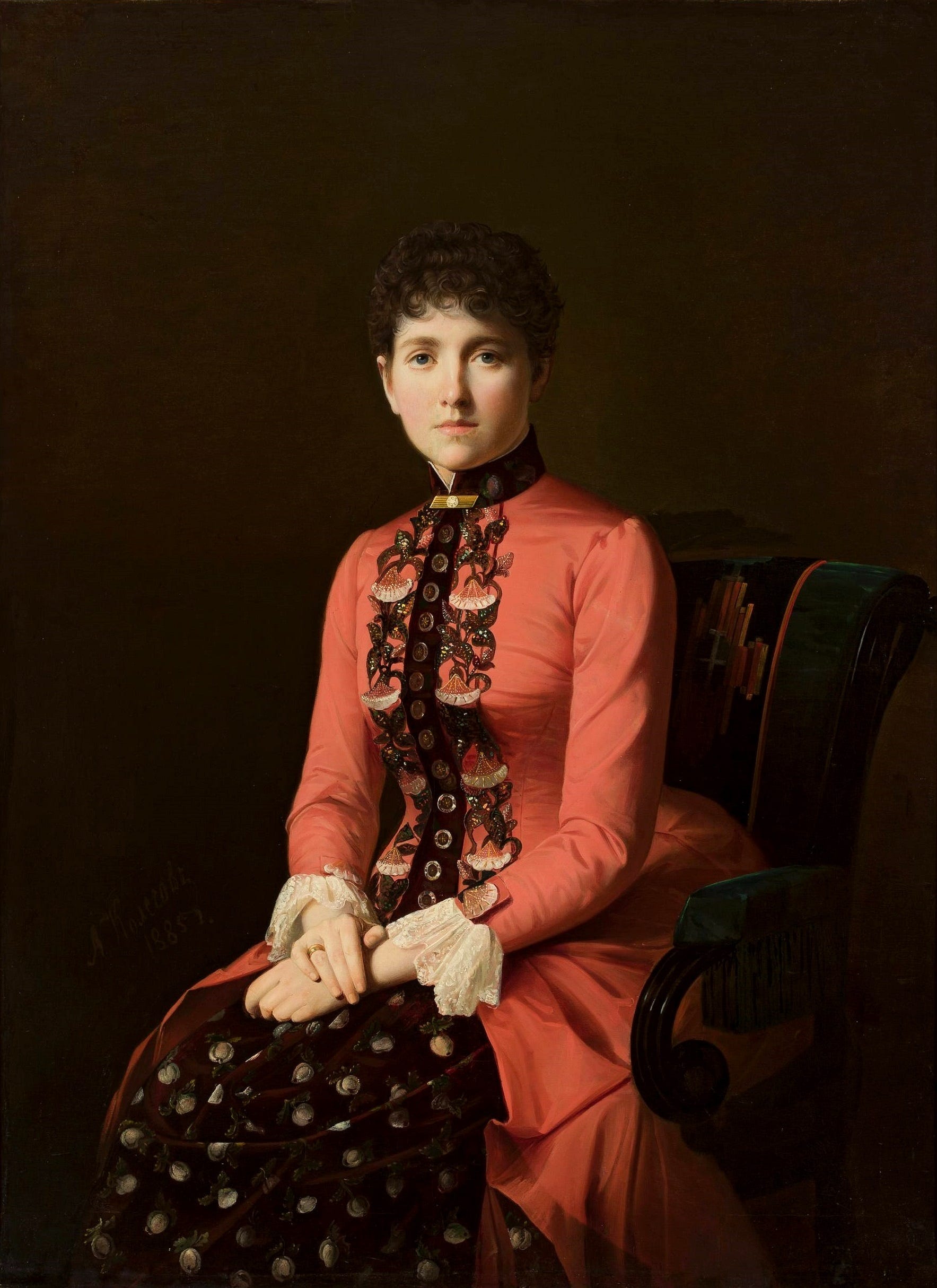
Set in late 19th-century high-society Russia, the novel weaves together the contrasting lives of two main characters: Anna Karenina and Konstantin Levin.
Anna’s Story: Anna is a beautiful, sophisticated aristocrat married to a rigid government official, Alexei Karenin. Her life changes when she meets the dashing military officer, Count Vronsky. The two fall into a passionate, consuming love affair. When Anna chooses to leave her husband and young son to live openly with Vronsky, Russian high society brutally ostracizes her for her hypocrisy, while Vronsky retains his social freedom. Overwhelmed by isolation, intense jealousy, and the crumbling of her relationship, Anna’s mental state spirals into deep despair. She ultimately throws herself under a freight train.
Levin’s Story: Running parallel to Anna’s tragedy is the story of Konstantin Levin, a wealthy landowner who prefers the quiet life of the countryside over the vanity of the city. He courts and eventually marries a young princess, Kitty Shcherbatskaya. Through the quiet rhythms of rural family life, farming, and hard physical labor alongside his peasants, Levin undergoes a profound spiritual journey, moving from existential dread to finding meaning and peace.
When Tolstoy was writing the final, agonizing chapters of Anna’s downward spiral, he locked himself away in his study at his estate, Yasnaya Polyana. He gave strict orders to his servants that no one was to disturb him or open the door for any reason until he emerged on his own.
Days passed in complete silence. Finally, gripped by worry, a servant opened the door to check on him. She found Tolstoy collapsed on the floor, weeping uncontrollably. Through his tears, he looked up at her and uttered the devastating words:
“And Anna Karenina is dead.”
It’s a powerful moment that shows just how intensely Tolstoy lived with his characters to him, Anna wasn’t just a creation on paper; her death was a genuine, heartbreaking loss.