

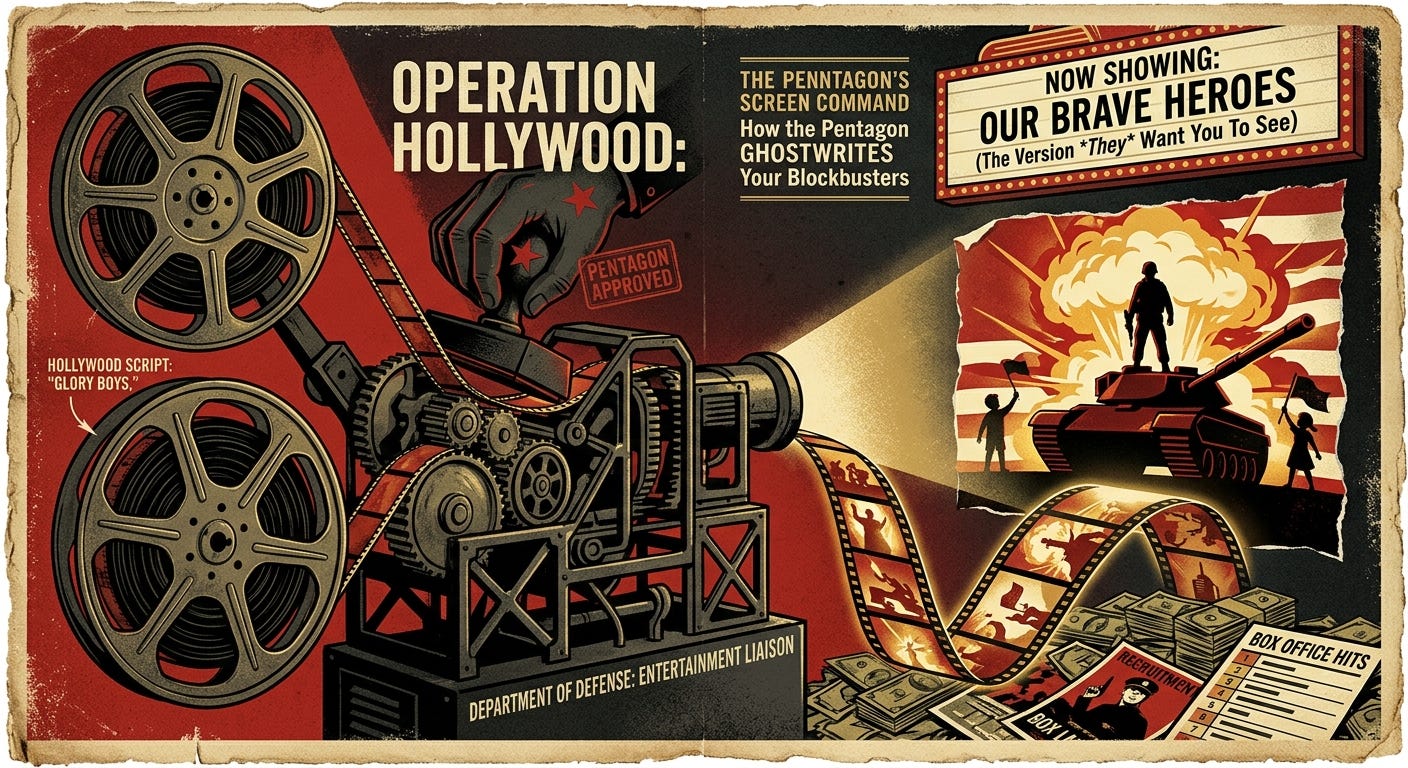
The relationship between the Pentagon and Hollywood is a highly organized, century-old pipeline known as the military-entertainment-industrial complex. Through the Department of Defense (DoD) Entertainment Media Office and dedicated branch liaison offices in Los Angeles, the U.S. military has directly influenced the scripts and narratives of over 2,500 movies, television shows, and documentaries.
The dynamic is straightforward: Hollywood needs the “toys” (tanks, aircraft carriers, fighter jets, and authentic bases) to make high-budget blockbusters look real. The Pentagon has them, but they don’t hand them over for free. The currency is narrative control.
How the Pipeline Works
[Script Submission] ──> [Pentagon Review & Vetting] ──> [Negotiated Rewrites] ──> [Access Granted: Jets, Troops, Bases]
The Script Vetting Process
If a studio wants to use active military hardware or film on a military installation, they must formally submit the screenplay to the DoD. Officials review the script line by line. If the military is portrayed negatively, the chain of command looks incompetent, or U.S. foreign policy is criticized, the Pentagon demands changes before granting approval.
Subsidized Production Value
Renting civilian equivalents of military hardware or using CGI is incredibly expensive. Getting Pentagon approval acts as a massive financial subsidy. Production companies only pay for the operating costs (like fuel or specific hourly rates for jets), saving millions of dollars. In exchange, the military gets a multi-million-dollar commercial for service.
Medium
The Pentagon’s Objectives
“The easiest way to inject a propaganda idea into most people’s minds is to let it go in through the medium of an entertainment picture when they do not realize that they are being propagandized.”
— Elmer Davis, Director of the Office of War Information (WWII)
Responsible Statecraft
Recruitment: Blockbusters like Top Gun (1986 and 2022) serve as highly effective recruitment tools. When the original film debuted, the Navy set up recruitment tables directly inside theater lobbies to catch young viewers riding a wave of adrenaline.
Wikipedia
Public Relations & Image Branding: The DoD uses cinema to popularize a specific “geopolitical imagination.” In these narratives, American intervention is framed as a necessary, stabilizing force for global good, and military technology is showcased as flawless and dominant.
ResearchGate
Normalizing the Complex: By embedding military assets into mainstream pop culture—including science fiction blockbusters like Marvel films or alien invasion tropes—the presence of massive military infrastructure becomes normalized as an everyday reality to the civilian public.
Inkstick Media
If a filmmaker refuses the edits, the Pentagon walks away, taking the jets and carriers with them. For major studios trying to manage a budget, playing ball with the Pentagon’s gatekeepers is often treated simply as the cost of doing business.
James Bond: Protecting the Brand
The James Bond franchise frequently relies on real military power to create its high-stakes, global-scale action. Because of this, several Bond films had to go through the Pentagon vetting process.
The primary rule when working with the James Bond films was simple: The U.S. Military cannot look incompetent, corrupt, or treasonous.
GoldenEye (1995): In the original script, a high-ranking U.S. Navy Admiral is seduced and murdered by a villain, who then steals his top-secret security credentials to hijack a sophisticated military helicopter. The Pentagon flatly refused to cooperate with this storyline. To secure the military equipment needed for the film, the producers had to rewrite the script so that the traitorous, compromised Admiral was changed to a member of the French Navy instead.
Tomorrow Never Dies (1997): The producers wanted to shoot a military parachuting scene. To get permission and technical support, they had to ensure that the script did not depict any unauthorized or illegal U.S. military cross-border operations that could cause a real-world diplomatic incident.
Lassie: The Unexpected Target
Perhaps the most surprising example of the Pentagon’s reach into pop culture is Lassie. People don’t think of a wholesome show about a Collie as a piece of military PR, but it highlights just how closely the Department of Defense watches everything on television.
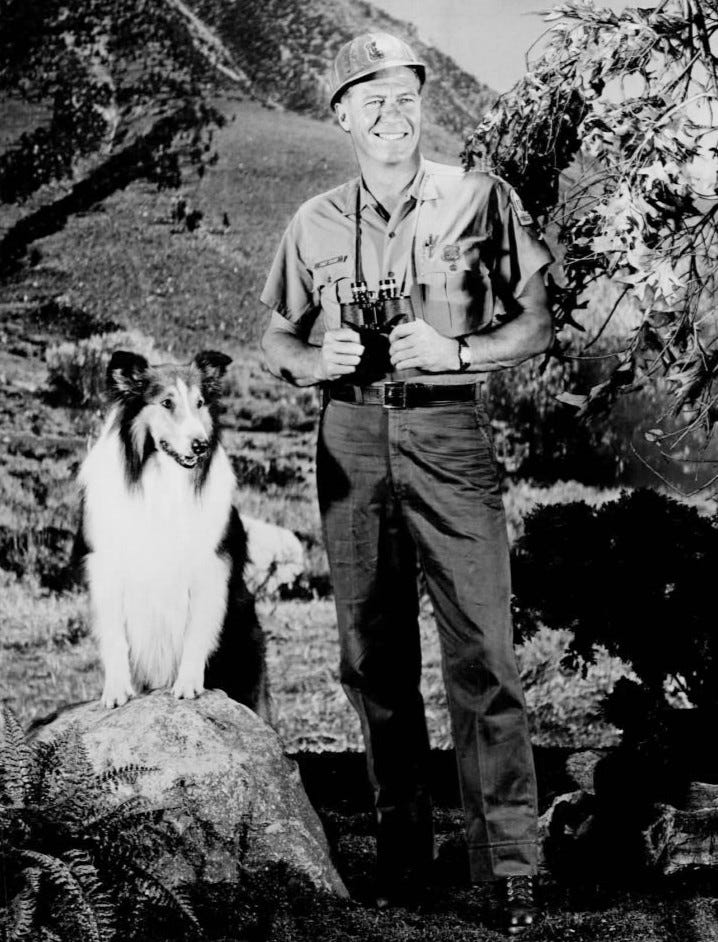
In David Robb’s investigative book Operation Hollywood, he breaks down a specific 1961 episode titled “Timmy and the Martians”:
The Original Plot: A military plane crashes nearby. Lassie alerts her owner, Timmy. When the military arrives and pieces the wreckage back together, they realize the crash was caused by a mechanical failure—a faulty wing design created a high-pitched vibration that only Lassie’s sensitive ears could detect before it snapped.
The Pentagon’s Objection: The Air Force strongly objected to the idea that their aircraft had manufacturing defects or that mechanical failure caused a crash. They felt it made military technology look unreliable to the public.
The Forced Rewrite: To keep the military’s cooperation, the writers were forced to alter the script. Instead of a mechanical defect, the crash was changed to a freak weather accident, completely absolving the Air Force and its technology of any blame.
Whether it’s swapping a character’s nationality in a multimillion-dollar spy thriller or erasing a mechanical glitch on a classic family TV show, the goal remains the same: project absolute competence, safety, and heroism.
Sources
ource: Operation Hollywood: How the Pentagon Shapes and Censors the Movies by David L. Robb (Prometheus Books, 2004).
National Security Cinema: The Shocking New Evidence of Government Control in Hollywood by Matthew Alford and Tom Secker (CreateSpace, 2017).
The CIA in Hollywood: How the Agency Shapes Film and Television by Dr. Tricia Jenkins (University of Texas Press, 2012). While focused on the CIA, it provides deep context on how various government intelligence and military branches compete for narrative space in Hollywood.