

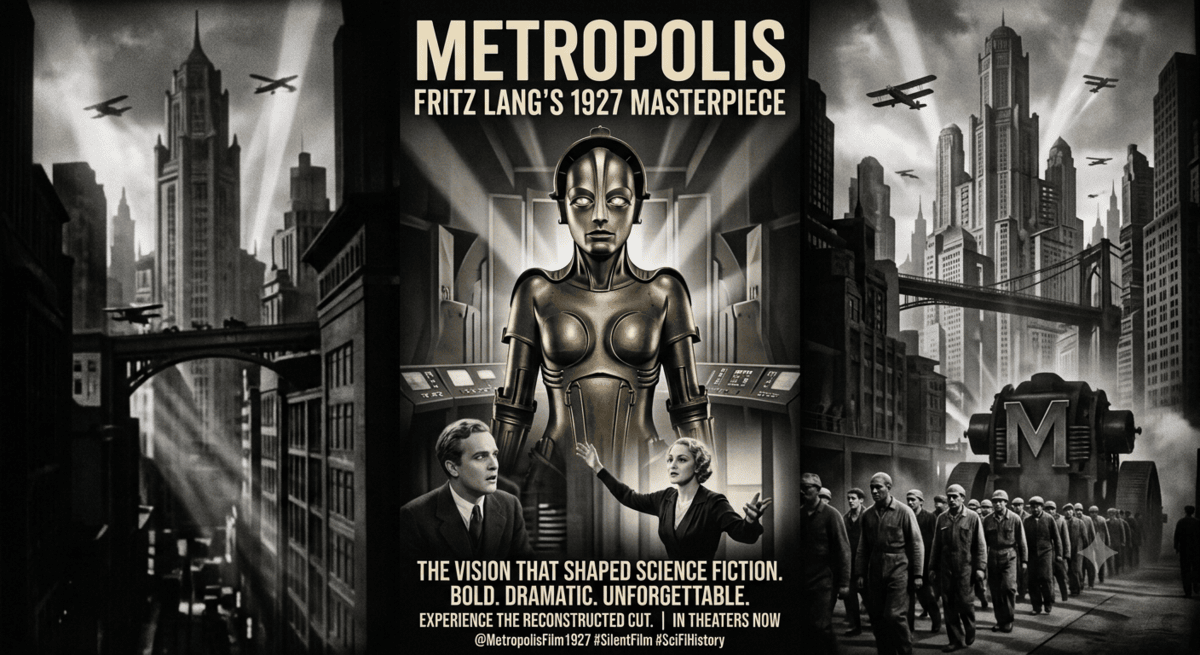
Fritz Lang’s silent masterpiece Metropolis (1927) is the blueprint for modern science fiction. Filmed during Germany’s Weimar Republic era, it pioneered visual effects and established sci-fi tropes still used today.
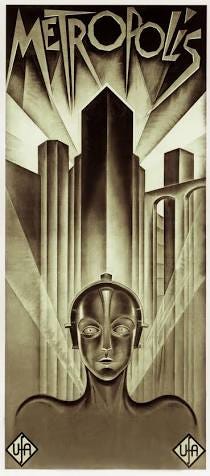
Plot Summary
The movie takes place in a futuristic, sharply divided city.
The High Society: Rich industrialists live high above the clouds in luxurious skyscrapers and pleasure gardens, managed by the city’s ruthless mastermind, Joh Fredersen.
The Workers: The working class lives deep underground, operating brutal, monster-like machinery on grueling shifts to keep the city running.
The story follows Freder, Fredersen’s privileged son. After meeting Maria, a saintly woman who preaches hope and patience to the subterranean workers, Freder sneaks underground. Horrified by the sweatshop conditions, he decides to help them.
Discovering this, Fredersen teams up with the mad scientist Rotwang to kidnap Maria. Rotwang transfers her likeness onto a metallic robot—the Maschinenmensch (Machine-Human). The evil robot-clone Maria is sent to the underground city to incite a violent, destructive rebellion. This rebellion floods the worker city, forcing Freder and the real Maria to save the workers’ children and ultimately bring peace.
Key Themes & Analysis
1. “The Mediator Between the Head and the Hands Must Be the Heart”
This is the central thesis of the movie. The “Head” represents the elite thinkers and planners (Joh Fredersen), while the “Hands” represent the labor force doing the manual work. The movie argues that without the “Heart” (empathy, represented by Freder), society collapses into tyranny or chaotic rebellion.
2. German Expressionism & Art Deco Architectural Power
Lang used massive, exaggerated architectural designs to show how human beings are swallowed up by industry. The machines are literally framed as gods; in one famous hallucination, a massive power plant turns into Moloch, a pagan god devouring human sacrifices.
3. Technological Fear and the “Femme Fatale” Robot
The robot version of Maria taps into deep 20th-century anxieties regarding automation replacing humanity. Once given a female form, the robot uses sexuality to destabilize society, playing into fears of out-of-control technology destroying traditional moral structures.
Movies Inspired by Metropolis
Nearly every major sci-fi city or robot design over the last century owes a debt to Fritz Lang’s visuals.
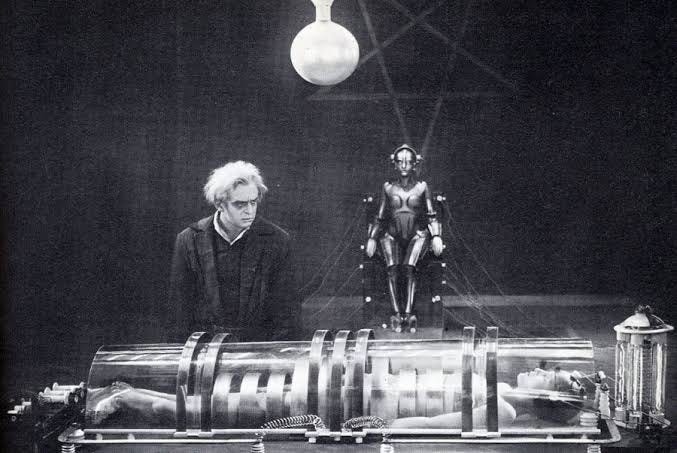
Star Wars (1977): Concept artist Ralph McQuarrie directly based the look of C-3PO on the Maschinenmensch from Metropolis.
Blade Runner (1982): Ridley Scott’s vision of a multi-layered, vertically stacked Los Angeles—with flying cars weaving between looming corporate ziggurats—is a direct, gritty update of the Metropolis cityscape.
The Terminator (1984): The concept of a metallic, endoskeleton killer disguised in human skin directly mirrors Rotwang’s creation.
Batman (1989): Anton Furst’s Academy Award-winning, oppressive Art Deco architecture for Gotham City was heavily influenced by Lang’s sprawling monuments.
The Matrix (1999): The structural division of the world—humans trapped underground providing literal energy to power a mechanical world above—shares deep DNA with the workers serving the great machine.
Sources
Database & Streaming Profiles
IMDb (Internet Movie Database): Metropolis (1927) – Offers full cast and crew lists, production trivia, and release dates.
Rotten Tomatoes: Metropolis Reviews – Provides a compilation of historical and contemporary critical reviews.
Critical Analysis & Essays
The Criterion Collection: Metropolis: The Film That Ate Itself – Essays by film historians analyzing Fritz Lang’s direction and the movie’s architectural influence.
Roger Ebert’s Great Movies: Metropolis Review – A comprehensive critique by the famous film critic detailing the movie’s visual legacy and thematic weight.
Historical & Restoration Documentation
The Murnau Stiftung (Murnau Foundation): Metropolis Restoration – The definitive legal custodians of the film who led the massive 2010 restoration effort after the lost footage was discovered in Argentina.
Science Fiction Film Studies: Academic journals via JSTOR host numerous papers detailing how Metropolis influenced the visual design of modern films like Blade Runner and Star Wars.