

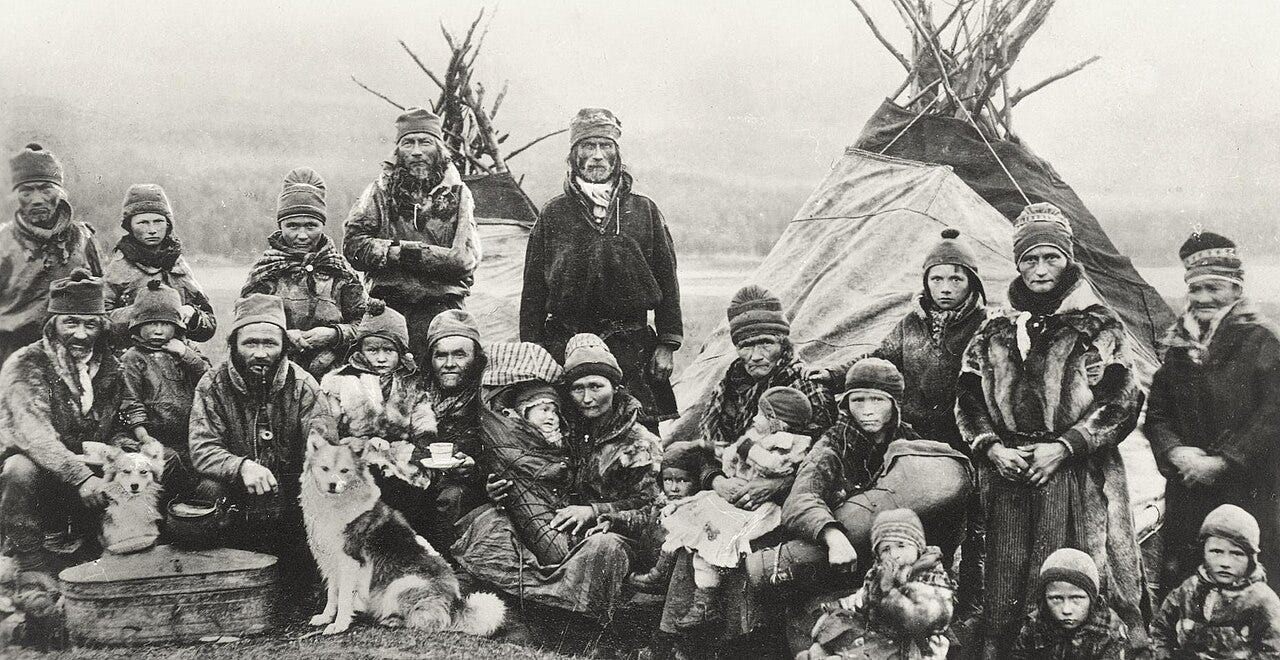
For centuries, the Sámi people lived in harmony with the unforgiving environments of Sápmi, a vast arctic region stretching across the northern latitudes of modern Norway, Sweden, Finland, and Russia’s Kola Peninsula. As distinct indigenous groups with deeply rooted spiritual traditions, complex reindeer husbandry practices, and unique language groups, they possessed a rich and thriving culture. However, as the Nordic nation-states sought to consolidate their borders, centralize economic power, and establish homogeneous national identities during the 19th and 20th centuries, the Sámi became the targets of highly coordinated, aggressive state-led assimilation policies designed to erase their distinct identity.
The Weaponization of Education and Land
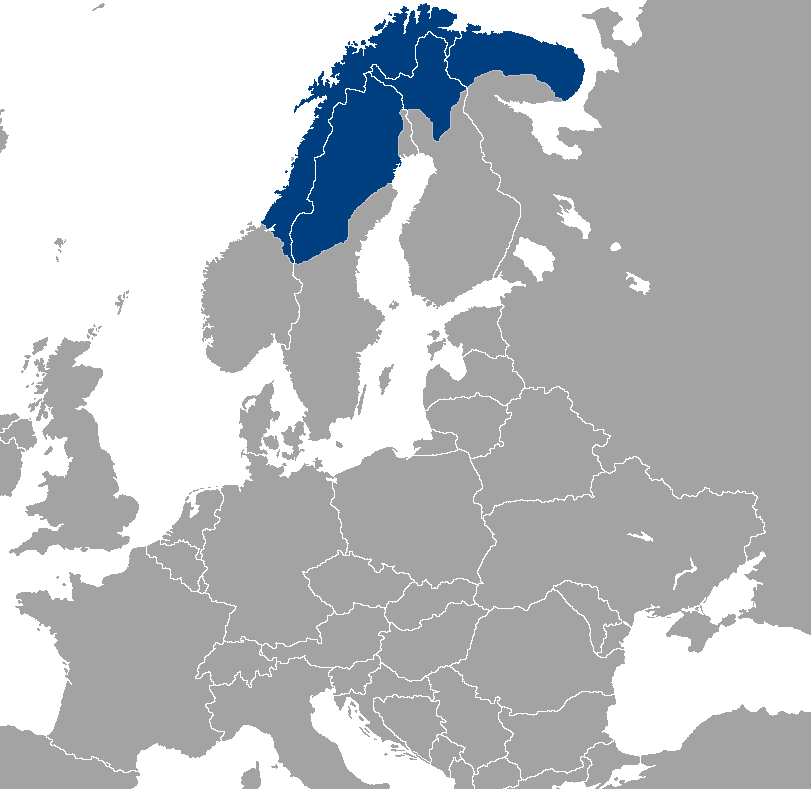
In Norway, this policy was formalized under the term ‘Norwegianization’ (fornorsking). Beginning in the mid-1800s and continuing deep into the 20th century, the state enacted strict legislation targeting Sámi language and land rights. The Land Act of 1902 decreed that state land could only be sold to individuals who could speak, read, and write the Norwegian language fluently, and who officially adopted a Norwegian name. This law effectively stripped many traditional Sámi herders and fishermen of their ancestral lands, turning them into tenants on the soil their ancestors had managed for millennia.
The primary battleground for cultural erasure, however, was the residential school system. Generations of Sámi children were removed from their families and placed into state-run or church-run boarding institutions. Inside these facilities, speaking Sámi languages was strictly forbidden and severely punished. Children were forced to adopt new names, wear western clothing, and abandon their traditional customs. The joik the sacred, improvisational vocal folk poetry of the Sámi was condemned as sinful and heathen, and its practice was systematically outlawed. By separating children from their elders, the state successfully interrupted the oral transmission of knowledge, fracturing the linguistic continuity of entire generations.
The Pseudoscience of Superiority
In Sweden, the assimilation campaign took a pseudo-scientific turn with the establishment of the State Institute for Racial Biology in Uppsala in 1922, led by Herman Lundborg. Researchers traveled extensively throughout northern Sweden, forcing Sámi men, women, and children to undergo degrading physical examinations, cranial measurements, and nude photography. These activities were intended to classify them as an ‘inferior race’ whose cultural practices were incompatible with modern European progress. Under the Swedish policy of ‘Lapp ska vara lapp’ (The Lapp shall remain a Lapp), the state segregated nomadic reindeer-herding Sámi from the rest of society, denying them standard educational opportunities under the assumption that they were intellectually incapable of participating in modern civilization, while forcibly assimilating non-herding Sámi to erase their indigenous status.
This dark era of state policy persisted well into the post-WWII era, leaving behind a legacy of profound intergenerational trauma and significant language loss. It is only in recent decades that Truth and Reconciliation Commissions across Norway, Sweden, and Finland have begun investigating the full scope of these systematic violations, challenging the global perception of Scandinavia and exposing the historic cost of forced cultural uniformity.
sources
Primary Government Reports & Truth Commissions
The Norwegian Truth and Reconciliation Commission Report (2023)
The Finnish Truth and Reconciliation Commission Final Report (2025)
The Swedish Truth Commission for the Sámi People (Ongoing, Expected late 2026)
Sámi people - Wikipedia