

From the 1970s until 1995, the US Defense Intelligence Agency poured millions of dollars into investigating whether psychics could be used for military intelligence. The program focused on “remote viewing” the alleged ability to mentally “see” a hidden, distant location thousands of miles away. It was eventually shut down after concluding it wasn’t reliable enough for actionable espionage.
The Minds of War: Inside the US Military’s Psychic Spy Program
To look back at the Cold War is to look at an era defined by existential desperation. By the early 1970s, the United States and the Soviet Union were locked in a stalemate where any perceived advantage no matter how bizarre could turn the tide. It was in this hyper-paranoid landscape that the US government embarked on one of its most unconventional intelligence experiments: a 20-year, multi-million dollar program to weaponize the human mind.
Known by its final codename, Project Stargate, the initiative sought to determine whether “remote viewing” the alleged ability to mentally perceive distant, hidden locations could be used for actionable military espionage.
The Cold War Catalyst
The genesis of America’s psychic spy program lay not in a sudden faith in the occult, but in deep-seated intelligence anxieties. In the late 1960s and early 1970s, declassified rumors and intelligence briefings suggested that the Soviet Union was pouring massive funding into “psychotronics” (the Soviet term for parapsychology) and mind-control research.
Fearing a “psychic gap” that could leave the nation defenseless against invisible Soviet mind-spies, the Central Intelligence Agency (CIA) and later the Defense Intelligence Agency (DIA) felt compelled to act. If the Soviets were exploring the boundaries of the human mind, the United States could not afford to lag behind.
SRI and the Birth of “Remote Viewing”
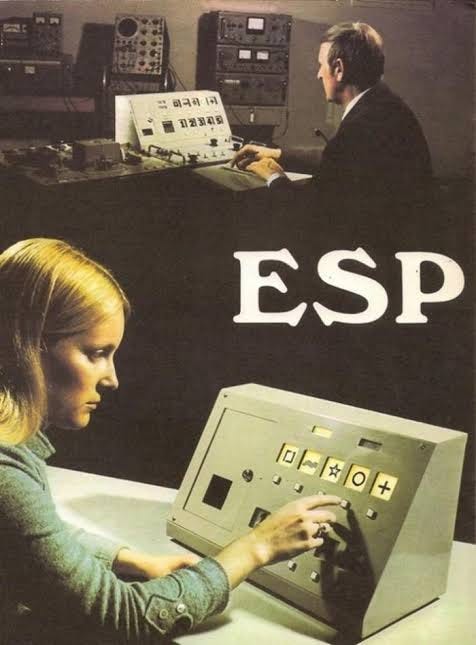
To ground these fringe ideas in scientific methodology, the government partnered with physicists Russell Targ and Harold Puthoff at the Stanford Research Institute (SRI) in Menlo Park, California.
The researchers coined the term “remote viewing” to distance their work from the sensationalism of stage magic and spiritualist “clairvoyance.” Under rigorous laboratory constraints, they recruited individuals who claimed to possess high psychic aptitude most notably a former police commissioner named Pat Price and an artist named Ingo Swann.
The protocols were strictly standardized:
A viewer would sit in a sensory-deprived, shielded room.
They would be given a set of geographic coordinates (latitude and longitude) or a sealed envelope containing a target description.
Without leaving the room, the viewer would enter a relaxed state and attempt to sketch or describe the physical structures, terrain, or activities at those distant coordinates.
To the astonishment of project handlers, some early trials yielded uncanny results. Ingo Swann, for instance, successfully described a hidden, highly secure Soviet facility, sketching structures that closely matched subsequent satellite photography.
Under the Military Umbrella
As the program evolved through the 1980s, management shifted primarily to the Defense Intelligence Agency, operating under a rotating series of codenames including GONDOLA WISH, GRILL FLAME, SUN STREAK, and finally, STARGATE.
Base operations were quietly established at Fort Meade, Maryland. Here, a small, tightly knit unit of military personnel was trained in Swann’s remote viewing methodologies. These psychic soldiers were tasked with real-world intelligence missions: locating downed Soviet aircraft, tracking hostages held in the Middle East, and peering inside locked hangars at Soviet submarine bases.
Among the unit’s most famous claims was the tracking of Soviet General Secretary Leonid Brezhnev’s health, and providing descriptions of a massive, top-secret Soviet submarine class before Western satellites could confirm its existence.
The Fatal Flaw: Inconsistency
Despite occasional, jaw-dropping successes, Project Stargate was plagued by a fundamental flaw that ultimately sealed its fate: unreliability.
For every accurate sketch a remote viewer produced, there were dozens of completely inaccurate, vague, or misleading descriptions. In the world of military intelligence, where lives depend on precise data, “sometimes accurate” is highly dangerous. Analysts could never determine which psychic impressions were accurate insights and which were simply mental noise or “imagination.”
By the early 1990s, the Cold War was over, the Soviet Union had collapsed, and the existential threat that birthed the program had vanished. Congress directed that management of the project be transferred back to the CIA, which commissioned an independent scientific review to evaluate Stargate’s utility.
Closing the Stargate
In 1995, the American Institutes for Research (AIR) released its final evaluation. Compiled by staticians and psychologists, including noted skeptic Ray Hyman and parapsychologist Jessica Utts, the report concluded that while some statistically significant anomalies occurred in laboratory settings, remote viewing remained far too inconsistent to be used in military operations.
The report stated:
“Advance intelligence operations cannot be based on a phenomenon where the hit rate is uncertain, and the information lacks the specific details required for military targeting.”
In late 1995, Project Stargate was officially terminated, and its archives were declassified. Over twenty years, the government had spent roughly $20 million.
Ultimately, Project Stargate remains a fascinating historical artifact a testament to a time when the stakes of the Cold War were so unimaginably high that the world’s most sophisticated military forces were willing to peer into the supernatural in search of an edge.
Sources
Central Intelligence Agency (CIA) Reading Room: The Declassified Stargate Project Files (Thousands of pages of operational logs, laboratory experiments, and internal memos available via the CIA Freedom of Information Act electronic reading room).
American Institutes for Research (1995): An Evaluation of Remote Viewing: Research and Applications. Prepared by Michael D. Mumford, Andrew M. Rose, and David A. Goslin.
Marks, David & Kammann, Richard (1980): The Psychology of the Psychic. (Prominent critical evaluation of the early SRI remote viewing experiments).
Schnabel, Jim (1997): Remote Viewers: The Secret History of America’s Psychic Spies. Dell Publishing.